O3 Chemicals Eliminates the Scourge of Mould in the Work Place
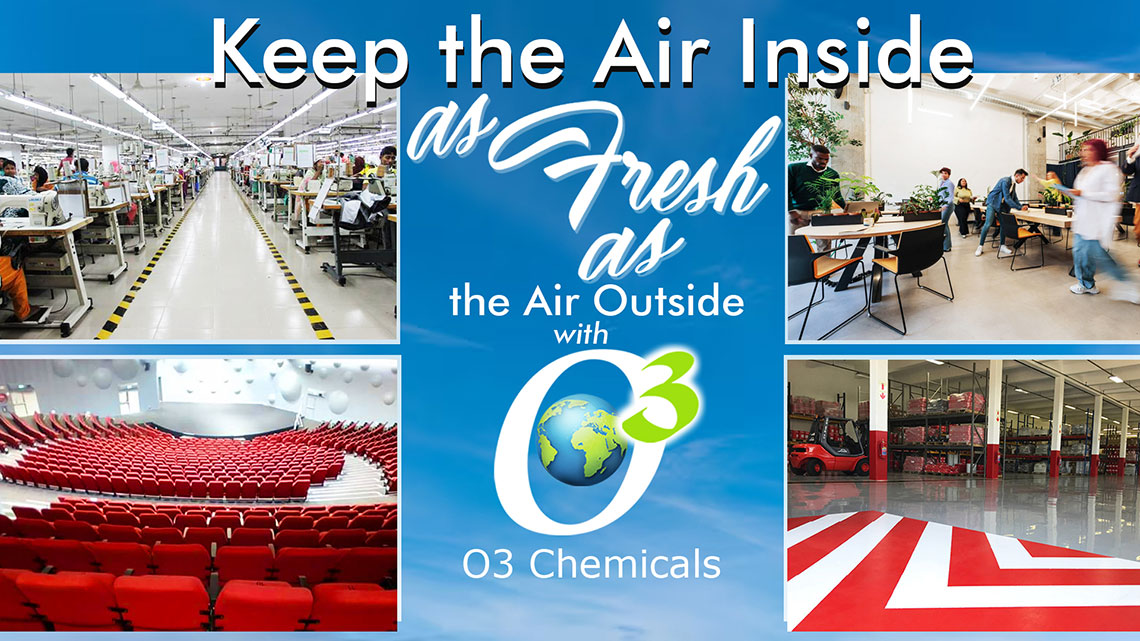
At O3 Chemicals, we know that air conditioning affects the work place,
affects your employees, affects your customers - and eventually . . .
affects your business. What are you going to do about it?
In offices, workshops, on the factory floor, classrooms, change rooms,
university residential blocks, canteens and in every nook and cranny in
the workplace . . .
and in every other air conditioning system you can think of.
It thrives in air conditioning for the following reasons:
• The darkness. Mould hates the light
• Mould loves the oxygen
• Mould loves the moisture
• And the food is the dirt and grime sucked in while the aircon is working
Almost ever since air-conditioning was invented, people have complained
about getting ill.
Mould is the problem in air conditioners due to high humidity, damp environments,
and condensation, leading to microbial growth in ducts, coils, and vents,
which affects air quality and many people’s health.
Increased dust or humidity from poorly maintained systems can result in
symptoms as such as allergic reactions which can cause chronic respiratory
problems to develop.
Other common ailments include: headaches, fatigue, weakness, fever, chills,
flu-like symptoms, shortness of breath, coughing, chronic sinusitis, sore
throat, burning eyes and difficulty concentrating.

So seriously are world health authorities taking the threat of mould,
that in June 2025 they forced one of the world’s largest manufacturers
of aircons to recall 1.7million aircons in the US and 45900 units in Canada
due to a design defect causing water to pool and mould to grow, posing
respiratory risks.
The recall covers 8,000, 10,000, and 12,000 BTU units sold from March
2020 to May 2025.
Mould relies on water to survive, yet there are still many contractors
who insist on using water only to clean aircons.
In any case, water doesn’t clean. If water cleaned, we wouldn’t need soap
in our shower or bath. Would we?
So, why should anyone think water cleans aircons. It doesn’t!
Mould and bacteria in air conditioning systems significantly impact the
workforce by degrading indoor air quality (IAQ), leading to a range of
physical health issues, reduced productivity, and increased absenteeism.
Poorly maintained systems circulate allergens and microbial pathogens,
causing illnesses often categorized as "Sick Building Syndrome“.
Respiratory Illnesses and Allergies
Inhaling mould spores (such as Aspergillus, Penicillium) and bacteria
(such as Legionella) can trigger respiratory problems like asthma, bronchitis,
allergic rhinitis, coughing, wheezing, and sore throats.
Physical Symptoms of Exposure
Employees may experience "sick building syndrome" symptoms, including
headaches, persistent fatigue, dizziness, nausea, fever, chills, and muscle
aches, which often improve away from the office.
Reduced Productivity and Cognitive Function
Poor air quality causes "brain fog," difficulty concentrating, and slower
decision-making, directly reducing individual and team performance.
Increased Absenteeism & Turnover
Chronic illness and discomfort lead to higher rates of sick leave, affecting
deadlines and team morale. Employees may also seek employment elsewhere
due to the unhealthy environment.
Severe Health Hazards
In extreme cases, bacteria like Legionella can cause Legionnaires' disease
(a severe form of pneumonia), and toxic mould (Stachybotrys chartarum)
can cause more severe infections, especially in immuno-compromised individuals.
Mould thrives in dirty, moist, or poorly maintained HVAC systems. Signs
include musty, earthy odors when the AC is running, visible mould on air
vents, or unexplained persistent respiratory issues among multiple staff
members.
Preventative Measures:
Regular maintenance - including professional cleaning and sanitization
of air conditioners
Replacing air filters - Checking drain pans. Using UV light purifiers
These steps can eliminate health threats and prevent microbial growth.
Signs of Contamination
• Musty/Earthy Odors: The most common indicator of microbial
growth.
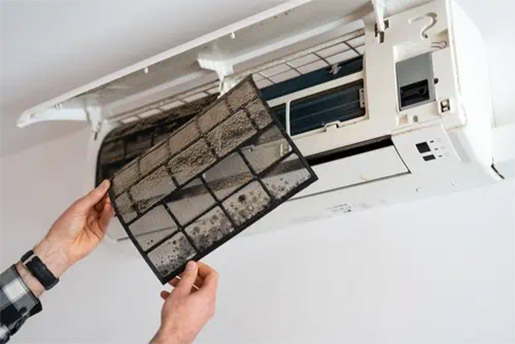
• Visible mould: Green, black, or white growth inside vents,
on diffusers, or around the air handler.
• Reduced Performance: Restricted airflow, bent fins, or excessive
dust and moisture.
Workplace Prevention & Management
• Regular Maintenance: Professional HVAC inspections should
occur at least annually.
• Filter Management: Replace air filters every 1 to 3 months.
• Moisture Control: Ensure proper drainage, reduce humidity
levels, and clean the air handler's drain pan to prevent stagnant water.
• Professional Cleaning: Large-scale contamination requires
specialized cleaning contractors, often involving disinfectants.
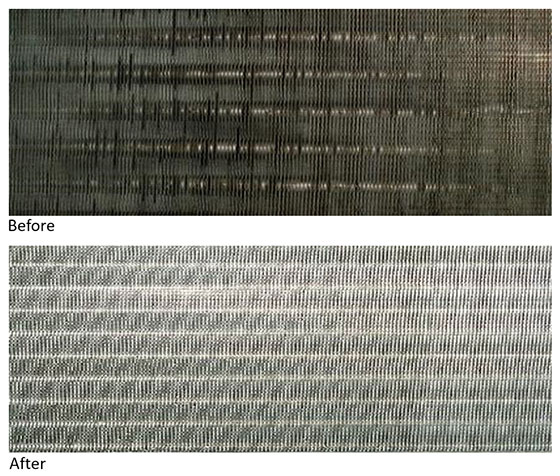
The images on the Right demonstrate the difference between air conditioner
coils, before cleaning – and after cleaning has been performed.
Mould will ALWAYS be an inherent danger for any air conditioner.
It is essential therefore we use the latest chemical technology to prevent
it from becoming a threat to all of us.
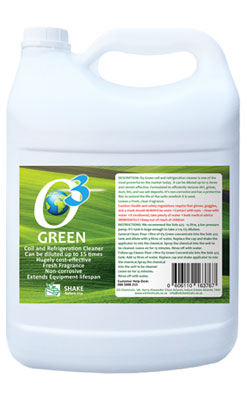
A Powerful, new generation, high-tech, non-corrosive, chemical cleaner,
specifically designed to remove health-threatening mould, bacteria and
fungi growing in general dirt and moisture in AHUs, chillers and condensors.
Strength and Economic Advantage
O3 GREEN is Supplied as a concentrate to be used –
• diluted 1:1 for a first annual application
• diluted 1:15 for the next 3 applications of the annual cleaning cycle
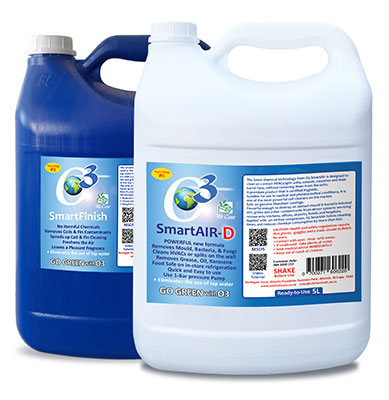
Another powerful, new generation, high-tech, non-corrosive, chemical cleaner
with a specifically designed built-in degreaser. Using the latest chemical
technology to remove health-threatening mould, bacteria and fungi that
grow in grease, cooking oil and fat in AHUs servicing restaurants, bakeries,
fast-food outlets and kitchens.
Strength and Economic Advantage
Alkaline
‘D’ is supplied as a concentrate to be used –
• diluted 1:1 for a first annual application
• diluted 1:15 for the next 3 applications of the annual cleaning cycle

New generation, high-tech, non-corrosive chemicals specifically designed
to be used in tandem to remove health-threatening mould, bacteria and fungi
in HVACs/split units, consols, cassettes, hideaways and condensors.
NO tap water is required for rinsing
These products’ labels incorporate QR codes, directing the user to a video
tutorial showing how to use the product efficiently and cost-effectively,
AND a copy of the SDS documents for the products.

Reference Sources:
At O3 Chemicals, we take air conditioner hygiene seriously. Because it
affects the clients of our customers. Read this article from United States
Consumer Product Safety Commission to find out more:
Read >> Midea Recalls About 1.7 Million U and U+ Window Air Conditioners
due to Risk of Mold Exposure
